

Power Supply
Enicstra stocks single-output regulated power supply units used to provide stable DC voltage for industrial sensors, PLC I/O, solenoid valves, relays, and small control loops. The most common output by far is 24 VDC, followed by 12 VDC for legacy equipment and 48 VDC for fieldbus-powered devices and PoE applications. Inventory covers compact 30–60 W units through 480 W high-current supplies.
Brands carried include Mean Well NDR/DRP/HDR series, Phoenix Contact TRIO and STEP, Siemens SITOP PSU100C/PSU200M, Puls MiniLine, Allen-Bradley 1606-XLP, TDK-Lambda DRB/DRJ, and Cosel KHEA/KHNA. Obsolete single-output supplies — discontinued legacy Mean Well codes, retired SITOP earlier variants, end-of-life Puls codes — are sourced through our supplier network. Each unit is bench-tested under load and ships with a 12-month functional warranty.
For an obsolete power supply unit, send the OEM part number for a quote within 1–2 business days.
Power Supply

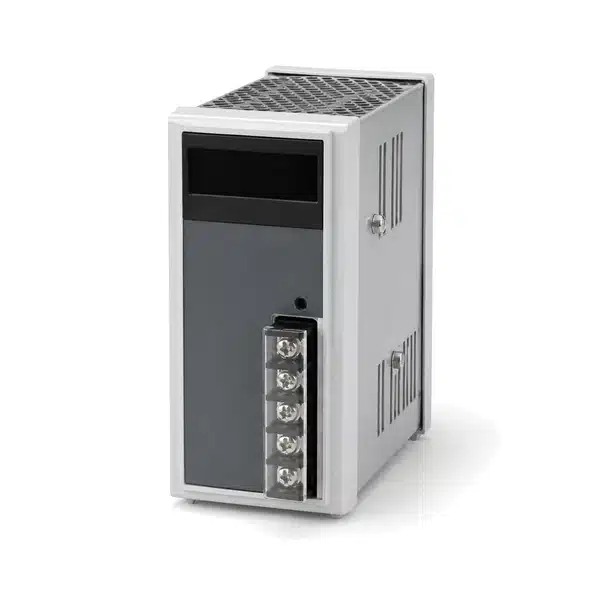

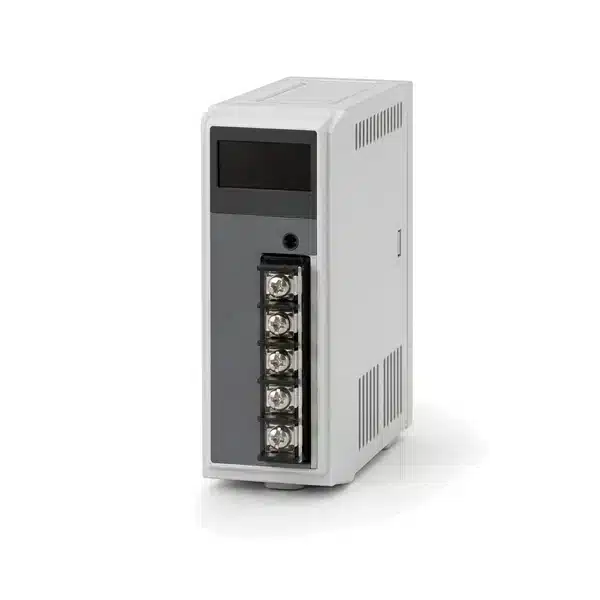


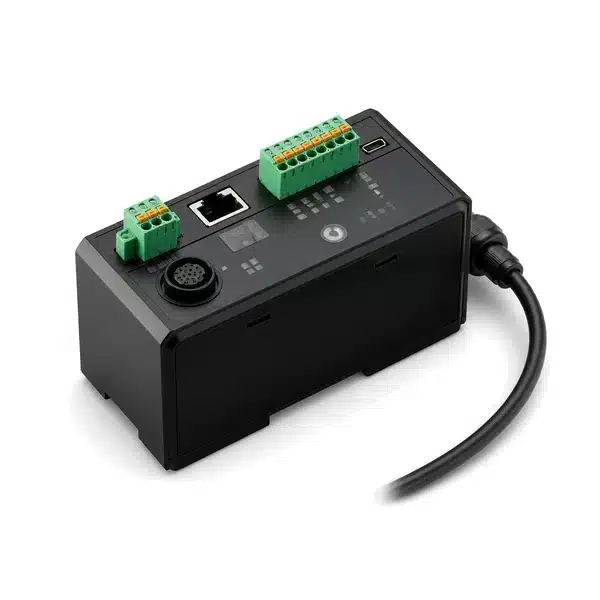
$1,176.52/ea
In Stock

$393.17/ea
In Stock

$249.00/ea
In Stock
Can't Find The Part You Need?
Send us the part number, manufacturer, quantity, and condition — we'll locate it.
Do you stock obsolete single-output PSUs?
Yes. Discontinued Mean Well legacy codes, retired SITOP PSU100C earlier variants, end-of-life Puls Dimension first generations, and earlier Phoenix Contact TRIO are sourced through our supplier network.
What size supply do I need?
Calculate the total steady-state DC load (sum of sensor currents, valve coils, PLC backplane, HMI), multiply by 1.3–1.5 for headroom, and choose the next standard size up. Round up; do not under-size for marginal cost savings.
Can I adjust the output voltage?
Most industrial PSUs have a small trim range (±5–10%) via a front-panel screw. Useful for compensating long cable runs. Setting too high damages downstream devices; setting too low causes sensor signal issues. Leave at nominal unless a specific reason exists.
Linear vs. switching — does it matter?
Switching is universal in current industrial supplies — higher efficiency, smaller size, less heat. Linear supplies are still used in very low-noise applications (precision analog, lab equipment) but are rarely interchangeable with switching units in a cabinet retrofit.
Will the supply trip my AC breaker on power-up?
Possible with multiple supplies on one branch circuit. Switching supplies have inrush surges; "active inrush limiting" is a feature on some that reduces the surge and avoids breaker trips. Specify it when multiple supplies share a breaker.
What is the warranty?
12-month functional warranty. Damage from input over-voltage, output short beyond protection, or thermal overload from missing cabinet ventilation is not covered.