

Reflectors
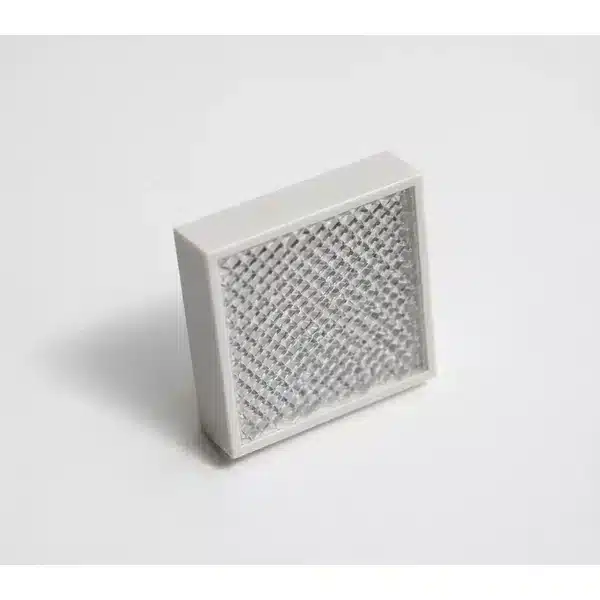
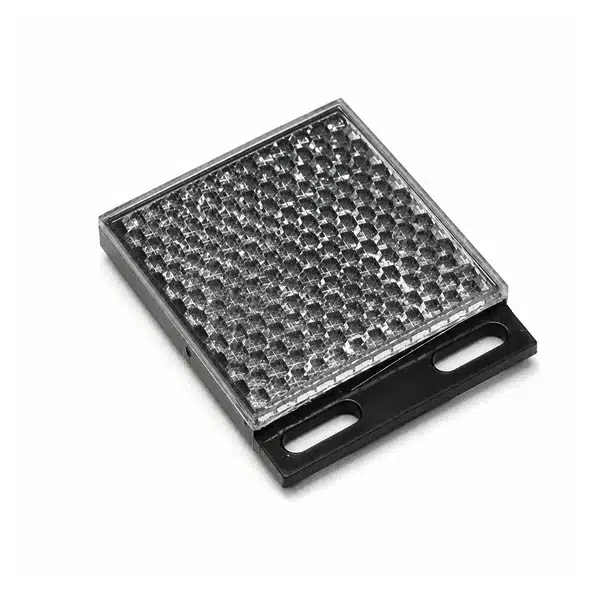
Reflectors are the passive partners to retroreflective photoelectric sensors. The sensor projects a beam at the reflector, which returns it along the same path to the receiver. Anything that breaks the beam triggers detection. Reflectors come in round, square, tape, and prismatic formats sized to match the sensor's beam pattern.
Enicstra stocks reflectors from Banner, SICK, Pepperl+Fuchs, Keyence, Omron, and generic manufacturers — covering current models and obsolete OEM-specific reflectors used in legacy installations. Sizes range from small round reflectors (under 10 mm) for short-range diffuse-mode applications to large heavy-duty reflectors (200+ mm) for long-range outdoor detection. We also stock reflective tape rolls and adhesive-backed reflector strips.
Match the reflector to the sensor manufacturer when possible — the reflector's prism design affects the maximum sensing distance. If you need an OEM-specific reflector not shown, send the original part number. Most quote inquiries reply within 1–2 business days.
Subcategories
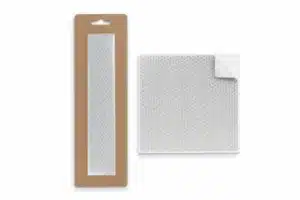
Retroreflective Target Reflectors
81 products
Standard retroreflective targets in round, square, and tape formats for photoelectric sensors — new and surplus in stock.
Reflectors
Can't Find The Part You Need?
Send us the part number, manufacturer, quantity, and condition — we'll locate it.
Do all reflectors work with all photoelectric sensors?
No. Sensor manufacturers often specify reflectors optimized for their products. Generic reflectors usually work but at reduced range. For polarized retroreflective sensors, you must use a polarization-rotating target — standard prismatic reflectors won't work.
Can you supply discontinued OEM reflector part numbers?
Yes — Banner BRT-series, SICK PL-series, Pepperl+Fuchs reflectors, and similar OEM-specific reflectors are commonly available. Even if a generic equivalent works at reduced range, sourcing the OEM part is often preferable for maintenance documentation.
What size reflector should I use?
Match the size to the sensor's specified sensing distance. A small 25 mm reflector might be rated to 1 m; a 50 mm reflector to 2 m; an 84 mm reflector to 7 m or more. Always size up for outdoor or contaminated environments to maintain signal margin as the reflector ages.
Do you carry reflective tape?
Yes — rolls of adhesive-backed prismatic tape are stocked, useful for confined spaces and short-range applications. Tape is more vulnerable to wear than a glass or hard-plastic reflector, so it's not ideal for high-cycle environments.
Are reflectors new?
Yes. All products offered for sale by Enicstra are new. For obsolete or hard-to-find part numbers, we search our supplier network for new inventory.