

Fieldbus and Ethernet Systems
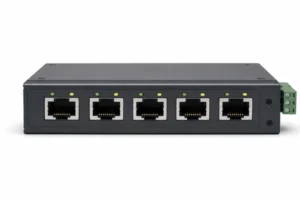
Enicstra stocks industrial network infrastructure: managed and unmanaged industrial Ethernet switches, media converters (copper to fiber, copper to fiber multimode/singlemode), routers and firewalls for plant-floor segmentation, fieldbus scanners, wireless industrial access points, and the network-monitoring tools used to commission and troubleshoot plant networks.
Brands carried include Hirschmann RS/RSP/RSPE switches, Cisco IE-series, Phoenix Contact FL SWITCH and FL MGUARD, Moxa EDS and TN-series, Belden GarrettCom, Stratix (by Allen-Bradley), Siemens Scalance X, Lantronix, and N-TRON. Obsolete network infrastructure — discontinued Hirschmann RS-series first generations, retired Moxa EDS codes, end-of-life Stratix 8000 — is sourced through our supplier network. Each unit is bench-tested for power-up and basic port function and ships with a 12-month functional warranty.
For obsolete network infrastructure, send the OEM part number for a quote within 1–2 business days.
Subcategories
IO-Link Masters
2 products
Fieldbus and Ethernet Systems



Can't Find The Part You Need?
Send us the part number, manufacturer, quantity, and condition — we'll locate it.
Do you stock obsolete industrial switches?
Yes. Discontinued Hirschmann RS20/RS30 first generations, retired Moxa EDS-405A/505A early codes, end-of-life Stratix 8000, and earlier Siemens Scalance X-100 are sourced through our supplier network.
Managed vs. unmanaged — which do I need?
Unmanaged for small isolated networks where plug-and-play is enough. Managed for any network that needs VLANs, redundancy, QoS for time-critical traffic (Profinet, EtherCAT, EtherNet/IP), or diagnostics access to the network status.
Will my switch configuration transfer to a replacement?
If the model and firmware match, yes via the OEM management software or web interface. Across firmware revisions or models, configuration usually needs to be exported/re-imported with manual touch-up. Export the configuration from any working switch before swapping.
Multimode vs. singlemode fiber — what's the difference?
Multimode (typically OM3/OM4, orange/aqua jacket) for shorter runs (up to ~550 m at gigabit). Singlemode (yellow jacket) for long runs (kilometers). Cannot be mixed — the SFP modules and the fiber type must match.
Do I need PoE for industrial cameras?
If your industrial cameras and IP devices support PoE, yes — PoE switches simplify wiring. For non-PoE devices, separate 24 V power and standard switches are fine.
What is the warranty?
12-month functional warranty. Damage from over-voltage on power inputs, surge events without protection, or operation outside rated temperature is not covered.