Interlock Switches

Interlock Switches

142 Products
View
< of 9 >
Keyence GS-11P10 Non-contact type Standard type PNP Standard cable 10 m
$463.04/ea ✓ Available
+ Product Group
Keyence GS-11P5 Non-contact type Standard type PNP Standard cable 5 m
$320.32/ea ✓ Available
+ Product Group
Keyence GS-11PC Non-contact type Standard type PNP M12 connector type
$432.93/ea ✓ Available
+ Product Group
Keyence GS-51PC Power-to-release Standard type PNP M12 connector type
$606.54/ea ✓ Available
+ Product Group
Keyence GS-53PC Power-to-release High performance type PNP M12 connector type
$728.40/ea ✓ Available
+ Product Group
Keyence GS-71N5 Power-to-lock Standard type NPN Standard cable 5 m
$932.00/ea ✓ Available
+ Product Group
Keyence GS-71P5 Power-to-lock Standard type PNP Standard cable 5 m
$328.23/ea ✓ Available
+ Product Group
Keyence GS-71PC Power-to-lock Standard type PNP M12 connector type
$478.28/ea ✓ Available
+ Product Group
Keyence GS-73PC Power-to-lock High performance type PNP M12 connector type
$1,239.21/ea ✓ Available
+ Product Group
Keyence GS-A21 Locking type Replacement Actuator
$258.94/ea ✓ Available
+ Product Group
Keyence GS-B11 Non-contact type Flat mounting bracket
$37.81/ea ✓ Available
+ Product Group
Keyence GS-B31 Locking type Hinged door mounting bracket (right-open)
$151.97/ea ✓ Available
+ Product Group
Keyence GS-H02 Escape Release
$336.95/ea ✓ Available
+ Product Group
Keyence GS-P12C5 M12 connector type Standard cable High performance type (12-pin) 5 m
$112.89/ea ✓ Available
+ Product Group
Keyence GS-P5C5 M12 connector type Standard cable Simple function type (5-pin) 5 m
$80.03/ea ✓ Available
+ Product Group
Keyence GS-P8C10 M12 connector type Standard cable Standard type (8-pin) 10 m
$157.90/ea ✓ Available
+ Product Group
<1234569>

Can't Find The Part You Need?

Send us the part number, manufacturer, quantity, and condition — we'll locate it.
Request a Quote

Choosing Interlock Switches components

Interlock switches without guard locking detect whether a guard is in place but do not hold it shut — when the guard opens, the safety output drops and the machine should stop. Selection comes down to contact configuration, coding method (to prevent defeat), and the mechanical layout of the guard.

Specs to confirm before ordering:

  • Switch technology: mechanical (tongue-and-key actuator), magnetic (coded reed), RFID-coded non-contact, hinge-mounted
  • Coding level: uncoded, low-coded, high-coded (uniquely coded RFID for defeat resistance)
  • Number of safety contacts (typically 2 NC + 1 NO is standard)
  • Performance Level capability — PL d typical, PL e with proper wiring and monitoring
  • Approach direction (linear, hinge, multi-direction for mechanical types)
  • Actuator style: tongue/key (mechanical), magnet (magnetic), coded target (RFID)
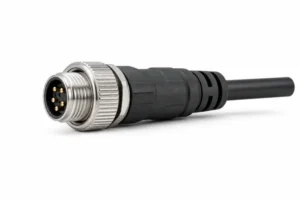
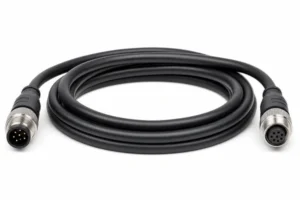
  • Cable or M12 connector style, pin count
  • IP rating — IP65 standard, IP67/IP69K for washdown
  • Series-wiring capability if multiple switches share one safety relay input

Common gotchas: mechanical tongue-and-key switches are easy to defeat by removing the key and inserting it directly into the switch — high-coded RFID switches resist this and meet higher defeat-resistance categories under ISO 14119. Magnetic switches will trigger on any matching magnet, which is why "high-coded" types use unique target-switch pairings. Series wiring of multiple safety interlocks reduces diagnostic coverage and can drop the PL rating; modern systems often use safety inputs on a controller instead of series-wired contacts. Actuator alignment matters — a misaligned tongue actuator wears out or fails to engage reliably.

Typical applications: machine guard monitoring on milling machines, mixer access doors, robotic cell gates without active locking requirement, and small-machine perimeter guards. For applications requiring the guard to stay locked while the hazard is present, see the Interlock Switches with Guard Locking category.

For obsolete interlock switches, send the OEM part number for a sourcing quote.

Do I need guard locking or just interlock monitoring?
Use interlock monitoring (this category) when the hazardous motion stops quickly enough on guard opening. Use guard locking when the hazardous motion takes time to stop and the guard must remain closed until safe — see the Interlock Switches with Guard Locking category.
Do you stock obsolete Schmersal, Euchner, and SensaGuard interlocks?
Yes. Discontinued Schmersal AZ8/AZ16/AZM161, retired Euchner TZ1/TZ2, end-of-life Allen-Bradley SensaGuard first generations are sourced through our supplier network.
Can I series-wire interlock switches?
Yes, but series wiring reduces diagnostic coverage and may drop the PL rating of the safety function. Modern best practice is dedicated safety inputs on a controller with cross-monitoring per switch.
What is the difference between coded and uncoded?
Uncoded magnetic switches trigger on any matching magnet. Coded magnetic switches use specific magnet polarities. High-coded RFID switches use unique target-switch pairings that resist defeat — required by ISO 14119 for higher defeat-resistance levels.
How fast is shipping?
In-stock items ship same or next business day from St. Louis. Free US over $50, free international over $350.
What is the warranty?
12-month functional warranty on the switch. Safety-function performance is the integrator's responsibility, independent of the device warranty.
Shopping Cart