

Networking Solutions
Enicstra stocks industrial networking solutions used to architect, segment, and secure plant control networks: industrial firewalls and intrusion-prevention appliances, VPN routers for remote access to plant equipment, layer-3 routers for inter-subnet routing in large plant deployments, network address translation (NAT) gateways for machine-to-plant integration, and the protocol-aware appliances that enforce Profinet, EtherCAT, and EtherNet/IP traffic policies.
Brands carried include Phoenix Contact mGuard and FL MGUARD security routers, Hirschmann EAGLE firewalls, Moxa EDR/IES industrial routers, Cisco IE-series with security features, Tofino industrial security appliances, Siemens SCALANCE S security, and Stratix 5950 security appliances. Obsolete networking solutions — discontinued FL MGUARD first generations, retired EAGLE 20/30, end-of-life Tofino appliances — are sourced through our supplier network. Each unit is bench-tested for power-up and basic port function and ships with a 12-month functional warranty.
For obsolete networking solutions, send the OEM part number for a quote within 1–2 business days.
Subcategories
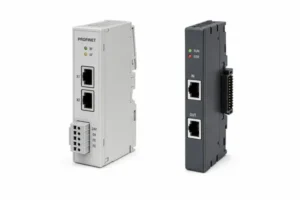
Fieldbus and Ethernet Systems
48 products
Industrial network infrastructure — managed switches, media converters, scanners, and network couplers.
Networking Accessories
8 products
Switches and Hubs
25 products
Networking Solutions
Can't Find The Part You Need?
Send us the part number, manufacturer, quantity, and condition — we'll locate it.
Do you stock obsolete industrial firewalls and routers?
Yes. Discontinued Phoenix Contact FL MGUARD first generations, retired Hirschmann EAGLE 20/30, end-of-life Tofino appliances, and earlier Moxa EDR-series are sourced through our supplier network.
Industrial firewall vs. enterprise IT firewall — what's the difference?
Industrial firewalls understand industrial protocols (Profinet, EtherNet/IP, Modbus TCP) and can filter on protocol-specific fields. They're built for plant environments (24V DC input, extended temperature, DIN-rail). Enterprise firewalls do general TCP/IP filtering but lack protocol-aware rules.
Will my saved firewall rules transfer to a replacement?
If the model and firmware match, yes — export and import via the OEM management interface. Across firmware revisions, rules sometimes need verification. Across models, rules need re-engineering. Always export from a working unit before swapping.
Can I use one VPN router for multiple sites?
The VPN router has a license-limited number of concurrent tunnels. Higher-tier licenses support more tunnels and more concurrent users. Specify the expected concurrent usage for the right model.
What is the role of NAT in machine integration?
NAT lets you connect machines that all use the same IP subnet (often 192.168.1.x as the OEM default) to one plant network without IP conflicts. Each machine sits behind a NAT gateway that translates its internal addresses to a unique external address.
What is the warranty?
12-month functional warranty on hardware. Damage from over-voltage, surge events without protection, or operation outside rated environment is not covered.