

Connectors and Interconnects
Enicstra stocks the full range of industrial connectors and interconnect hardware: circular connectors (M5, M8, M12, M16, M23), rectangular heavy-duty multi-pin connectors (Harting Han, Phoenix Variocon, Wieland), bulkhead and panel-feedthrough connectors, fiber optic connectors (LC, SC, ST, MTRJ), and the board-to-board, mezzanine, and ribbon-cable connectors used inside industrial controls.
Brands carried include Harting Han, Phoenix Contact M-series and Variocon, TE Connectivity, Amphenol, Hirschmann, Binder, Lumberg, Murr Elektronik, Wieland, ODU, Souriau, and Molex industrial. Obsolete connectors and discontinued legacy interconnect families are sourced through our supplier network. Items ship from St. Louis with a 12-month functional warranty on hardware.
For an obsolete connector or specific interconnect, send the OEM part number for a quote within 1–2 business days.
Subcategories
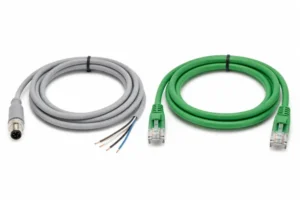
Cables and Plug-in Connectors
155 products
Pre-wired sensor and actuator cables with M8/M12 connectors plus field-wireable plug-in connectors.

Circular Connectors
16 products
Industrial circular connectors — M5, M8, M12, M16, M23 bulkhead, field-wireable, and panel-mount.
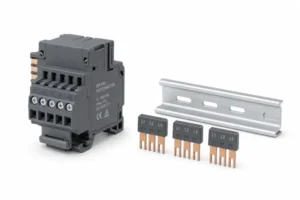
DIN Rail and Channel
14 products
DIN rail, wire duct, slotted channel, and panel-building mounting hardware for industrial cabinets.
Terminal Blocks
695 products
Terminals
14 products
Connectors and Interconnects
Can't Find The Part You Need?
Send us the part number, manufacturer, quantity, and condition — we'll locate it.
Do you stock obsolete industrial connectors?
Yes. Discontinued Harting Han legacy codes, retired Hirschmann ELKA/ELWIKA codes, end-of-life Lumberg field-wireables, and earlier Murr connectors are sourced through our supplier network.
M12 A-code vs. D-code vs. X-code — what's the difference?
A-code: sensors and actuators (most common). D-code: industrial Ethernet 100 Mbit. X-code: gigabit and 10 Gbit Ethernet. L-code: power. They have distinct keying so an X-code Ethernet cable cannot mate with an A-code sensor connector by accident.
Field-wireable vs. molded — which should I choose?
Field-wireable for repair, custom lengths, and panel-side terminations. Molded for new installations where the cable length is known — molded gives higher IP rating, better strain relief, and faster installation but cannot be shortened or repaired.
Can I mix connector brands as long as they're the same code?
For M-series connectors, generally yes — they are designed to mate across brands within the same code. For Harting Han and other rectangular families, housings and inserts must be from the same family but individual contacts may interchange.
How are connectors shipped?
From St. Louis in OEM or equivalent protective packaging. Free US shipping over $50, international over $350.
What is the warranty?
12-month functional warranty. Damage from over-mating-cycles beyond the rated count, mis-coding attempts, or cable pull-out from insufficient strain relief is not covered.