

Transducer Accessories
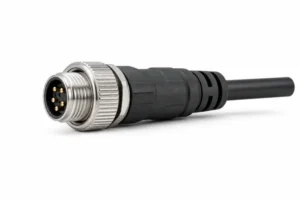
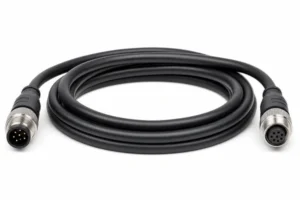
Enicstra stocks the accessories that complete a transducer installation: mounting brackets and adapter plates, isolation valves and two-valve/five-valve manifolds for pressure transducers, snubbers and pulsation dampeners, siphon tubes for steam service, weld-pads and threaded bosses, cable assemblies with matched connectors, NPT-to-G fitting adapters, and calibration adapters for in-service verification.
Brands carried include Anderson Greenwood manifolds, Swagelok and Parker process fittings, Wika manifolds and snubbers, Ashcroft accessories, NOSHOK, Bourdon-Haenni, and OEM-specific accessory kits from Honeywell, Endress+Hauser, and Wika sensing. Obsolete accessories are sourced through our supplier network. Items ship with a 12-month functional warranty on hardware.
For obsolete transducer accessories, send the OEM part number for a quote within 1–2 business days.
Transducer Accessories

Can't Find The Part You Need?
Send us the part number, manufacturer, quantity, and condition — we'll locate it.
Do I really need a snubber on pressure transducers?
Yes for any pulsing process — pump discharge, compressor outputs, reciprocating equipment. The transducer fatigues at the pulse rate, not the average pressure. Snubbers extend transducer life from months to years on those lines.
What is a two-valve vs. five-valve manifold?
Two-valve manifold: block + bleed for gauge pressure transducer service. Five-valve manifold: for differential pressure transducers, with high-side block, low-side block, equalize, and two bleeds. Five-valve allows zeroing the DP transducer in service.
Can I use a generic siphon tube on steam service?
If sized to match the line and the transducer's connection, yes — the siphon principle is universal. Match the connection thread and orientation (siphons come in pigtail and circular variants); both work, with slight difference in condensate handling.
Are calibration certificates included with accessories?
Mechanical accessories (manifolds, snubbers, fittings) typically have material certifications but not calibration certificates. Calibration adapters with built-in gauges may include calibration documentation.
How do I match the accessory to my transducer's connection?
Send the transducer model and process connection (e.g., 1/4 NPT female, G1/2 male) and we will match the appropriate accessory. Adapter fittings can convert between common thread types if a direct match is not stocked.
What is the warranty?
12-month functional warranty on hardware. Damage from over-pressure, corrosive media beyond the materials' rating, or installation errors is not covered.