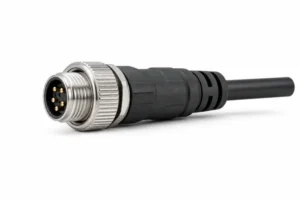
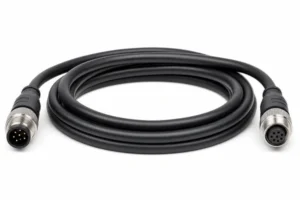
Contact Displacement Sensors (Probes)

Contact Displacement Sensors (Probes)
71 Products
View
< of 5 >
Keyence GT2-A12K Sensor Head, High-precision Type, Air Cylinder Model
$1,460.84/ea Available
+ Product Group
Keyence GT2-A12KL Sensor Head High-precision, Low Measuring Force Type, Air Cylinder Model
$1,552.99/ea Available
+ Product Group
Keyence GT2-A12L Sensor Head, Low Measuring Force Type, Air Cylinder Model
$1,293.09/ea Available
+ Product Group
Keyence GT2-A32 Sensor Head, Air Cylinder Model
$1,293.23/ea Available
+ Product Group
Keyence GT2-A50 Sensor Head, Air Cylinder Model
$1,425.95/ea Available
+ Product Group
Keyence GT2-CA10M Power Cable, Connector Type 10 m
$184.23/ea Available
+ Product Group
Keyence GT2-CA2M Power Cable, Connector Type 2 m
$273.01/ea Available
+ Product Group
Keyence GT2-CH10M Sensor Head Cable, Straight Type 10 m
$315.64/ea Available
+ Product Group
Keyence GT2-CH20M Sensor Head Cable, Straight Type 20 m
$577.99/ea Available
+ Product Group
Keyence GT2-CH2M Sensor Head Cable, Straight Type 2 m
$72.85/ea Available
+ Product Group
Keyence GT2-CH5M Sensor Head Cable, Straight Type 5 m
$184.73/ea Available
+ Product Group
Keyence GT2-CHL10M Sensor Head Cable L-type 10 m
$266.20/ea Available
+ Product Group
Keyence GT2-CHL2M Sensor Head Cable L-type 2 m
$164.56/ea Available
+ Product Group
Keyence GT2-CHL5M Sensor Head Cable L-type 5 m
$116.22/ea Available
+ Product Group
Keyence GT2-CHP5M Oil-resistant sensor Head cable (5m)
$429.39/ea Available
+ Product Group
Keyence GT2-E3P Extension Board for GT2-100P
$431.42/ea Available
+ Product Group

Can't Find The Part You Need?

Send us the part number, manufacturer, quantity, and condition — we'll locate it.

Request a Quote

Choosing Contact Displacement Sensors (Probes) components

Contact probe selection comes down to measuring range, accuracy class, contact tip style, and the readout/conditioner the probe pairs with. Contact probes wear over time as the tip rubs against the target; cycle-rated probes and replaceable tips extend useful life.

Specs to confirm before ordering:

  • Measuring range — typically ±0.5, ±1, ±2.5, ±5, or ±10 mm
  • Resolution and linearity — sub-micrometer to 0.1 µm class for high-end probes
  • Contact force — affects measurement on soft or flexible parts
  • Tip style and material: ruby ball (standard), carbide ball (long life), flat foot (averages over an area), knife edge (line contact)
  • Tip mounting: M2.5 threaded (most common), M3 threaded, or fixed
  • Probe technology: LVDT (analog mV signal), inductive-bridge, digital (with built-in conditioner), pneumatic
  • Output: analog millivolt LVDT (needs conditioner), 0–5 V / 0–10 V conditioned analog, digital RS-232/RS-485, USB, or proprietary controller bus
  • Conditioner/readout pairing — LVDT probes are typically calibrated to a specific conditioner
  • Mounting body diameter — typically 8 mm or 10 mm for fixture mounting
  • Spring return or pneumatic retraction for cycle applications

Common gotchas: LVDT probes are AC-excited and produce a small mV signal that must be amplified and conditioned — connecting an LVDT to a generic PLC analog input gives no useful signal. The probe and the conditioner are usually a matched pair with stored calibration; switching either alone changes the readout. Probe tips wear and lose accuracy over time; ruby tips last longest but are more expensive than steel. Probe contact force pushes on soft targets and gives compressed readings; high-cycle applications on soft materials need low-force probes or non-contact alternatives.

Typical applications: dimensional inspection in measuring fixtures, in-process gauging on machine tools, flatness and parallelism checks on machined parts, thickness verification through stack inspection, and assembly verification on precision parts. On legacy installations, exact-OEM probe replacement preserves the matched conditioner calibration.

For obsolete contact probes, send the OEM part number for a sourcing quote.

Do you stock obsolete contact probes?
Yes. Discontinued Mahr Millimar first generations, retired Solartron Metrology DP/DS codes, end-of-life Tesa, and earlier Heidenhain MT-series are sourced through our supplier network.
Do probe and conditioner need to be matched?
For LVDT probes, generally yes — calibration is stored in the conditioner and tied to the probe. Switching one alone changes the readout. Digital probes with built-in electronics avoid this dependency.
Ruby vs. carbide vs. steel tip — which should I use?
Ruby for highest accuracy and longest life — minimal wear on the tip itself. Carbide for high-cycle applications with cost-conscious budgets. Steel for low-cycle or general inspection.
How often do probe tips need replacement?
Depends on cycle count, target hardness, and contact force. For typical inspection fixtures: ruby tips can last years; carbide tips last months to a year; steel tips show wear within weeks of high-cycle use. Replace when accuracy verification (with a known artifact) shows drift.
Can the probe be used in coolant or oil?
Some probes are sealed for coolant exposure — confirm the IP rating on the probe body. Probes for dry inspection fixtures are not necessarily sealed against coolant intrusion.
What is the warranty?
12-month functional warranty. Tip wear from normal use is not covered as a warranty event. Damage from over-travel, impact, or contamination is not covered.
Shopping Cart