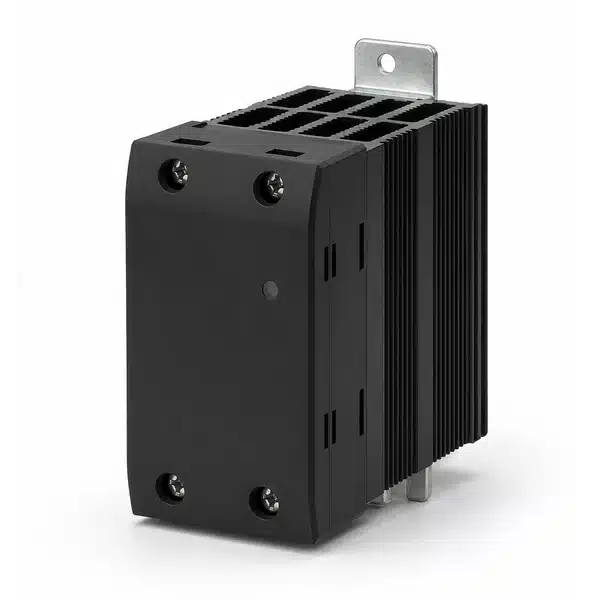
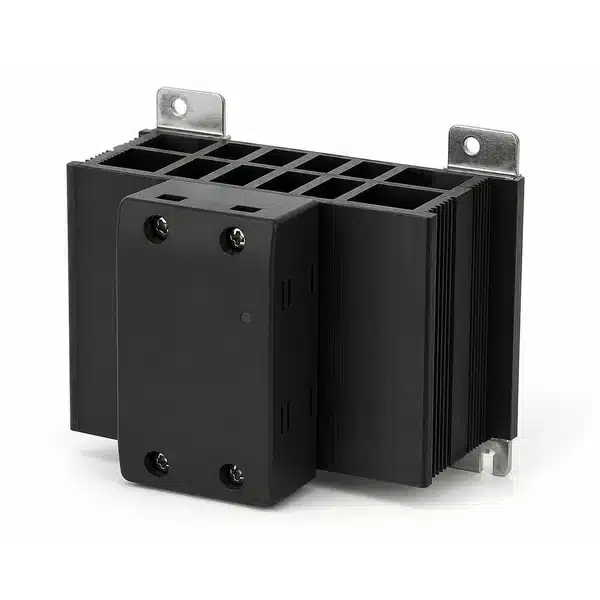
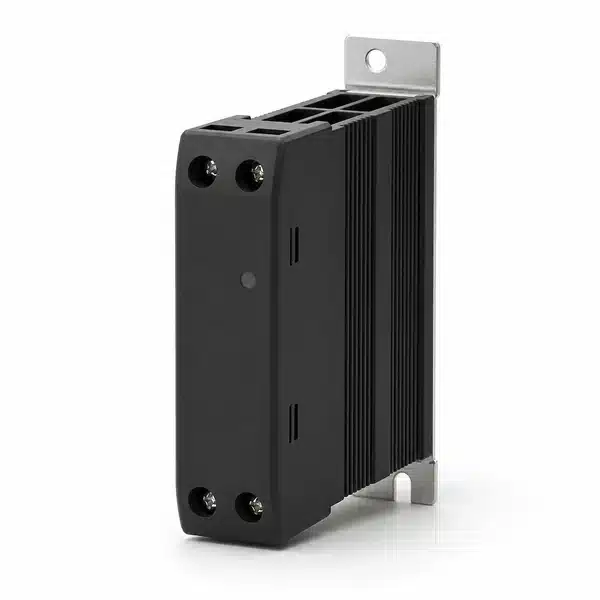
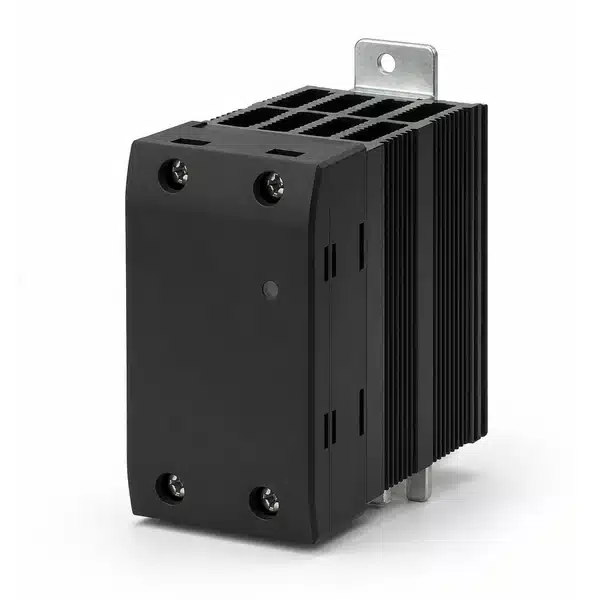
Solid State Relays (SSR)

Solid State Relays (SSR)
78 Products
View
< of 5 >
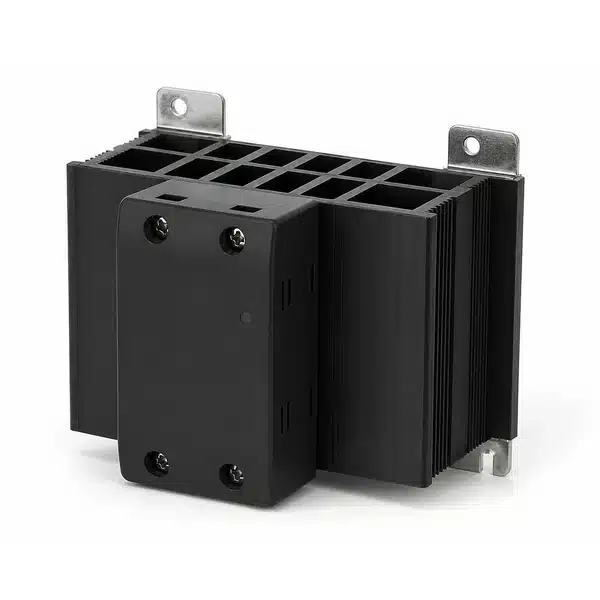
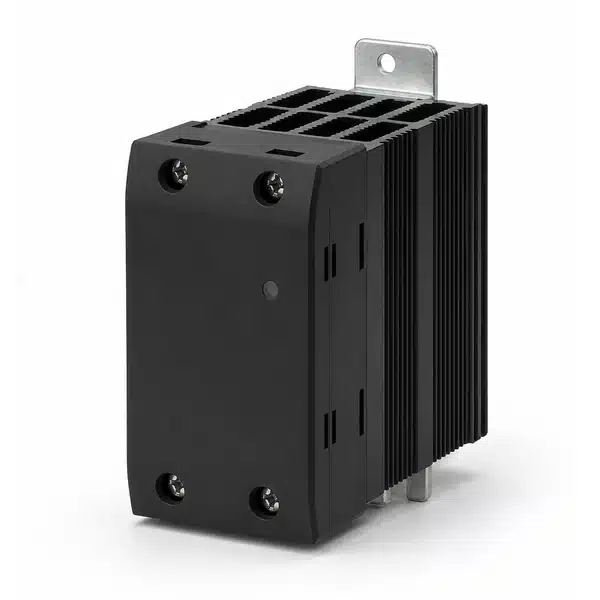
Autonics SRH1-1430-N Single-Phase Solid State Relays (Integrated Heatsink, Top/Bottom Terminal Type)
$51.30/ea ✓ Available
+ Product Group
Autonics SRH1-1440-N Single-Phase Solid State Relays (Integrated Heatsink, Top/Bottom Terminal Type)
$61.39/ea ✓ Available
+ Product Group
Autonics SRH1-1460-N Single-Phase Solid State Relays (Integrated Heatsink, Top/Bottom Terminal Type)
$78.01/ea ✓ Available
+ Product Group
Autonics SRH1-4220-N Single-Phase Solid State Relays (Integrated Heatsink, Top/Bottom Terminal Type)
$35.83/ea ✓ Available
+ Product Group
Autonics SRH1-4230-N Single-Phase Solid State Relays (Integrated Heatsink, Top/Bottom Terminal Type)
$46.52/ea ✓ Available
+ Product Group
Autonics SRH1-4240-N Single-Phase Solid State Relays (Integrated Heatsink, Top/Bottom Terminal Type)
$52.73/ea ✓ Available
+ Product Group
Autonics SRH1-4260-N Single-Phase Solid State Relays (Integrated Heatsink, Top/Bottom Terminal Type)
$68.10/ea ✓ Available
+ Product Group
Autonics SRH1-A220-N Single-Phase Solid State Relays (Integrated Heatsink, Top/Bottom Terminal Type)
$83.07/ea ✓ Available
+ Product Group
Autonics SRH1-A230-N Single-Phase Solid State Relays (Integrated Heatsink, Top/Bottom Terminal Type)
$90.99/ea ✓ Available
+ Product Group
Autonics SRH2-1450 Three-Phase Solid State Relays (Integrated Heatsink Type)
$193.80/ea ✓ Available
+ Product Group
Autonics SRH2-2450 Three-Phase Solid State Relays (Integrated Heatsink Type)
$188.81/ea ✓ Available
+ Product Group
Autonics SRH2-4415 Three-Phase Solid State Relays (Integrated Heatsink Type)
$127.56/ea ✓ Available
+ Product Group
Autonics SRH2-4440 Three-Phase Solid State Relays (Integrated Heatsink Type)
$144.83/ea ✓ Available
+ Product Group
Autonics SRH3-1230 Three-Phase Solid State Relays (Integrated Heatsink Type)
$120.31/ea ✓ Available
+ Product Group
Autonics SRH3-1250 Three-Phase Solid State Relays (Integrated Heatsink Type)
$166.41/ea ✓ Available
+ Product Group
Autonics SRH3-1430 Three-Phase Solid State Relays (Integrated Heatsink Type)
$150.18/ea ✓ Available
+ Product Group

Can't Find The Part You Need?

Send us the part number, manufacturer, quantity, and condition — we'll locate it.

Request a Quote

Choosing Solid State Relays (SSR) components

SSR selection is more nuanced than mechanical relays because the semiconductor device determines load compatibility, switching behavior, and thermal management. The wrong SSR for the load can fail silently (no clicking to indicate trouble) and take downstream equipment with it.

Specs to confirm before ordering:

  • Output type: AC (TRIAC or back-to-back SCR for AC loads) or DC (MOSFET or IGBT for DC loads)
  • AC switching mode: zero-cross (resistive loads — heaters) or random/instantaneous (inductive loads — motors, transformers)
  • Load voltage rating with sufficient margin — SSRs degrade with voltage transients
  • Load current rating, derated for the heatsink and ambient temperature
  • Input control: DC (typically 3–32 VDC), AC (90–280 VAC), or variable (4–20 mA proportional for SCR power controllers)
  • Mounting style: panel-mount with separate heatsink, DIN-rail, PCB pin
  • Built-in heatsink or external heatsink requirement
  • Surge current handling (for inrush — motors, lamps, transformers)
  • LED indicator if visual feedback is needed

Common gotchas: SSRs derate significantly with temperature — a 40A SSR may only handle 25A continuously without sufficient heatsink and airflow. Without a properly sized heatsink, the SSR overheats and shorts internally, often welding the output closed (load stays on). Zero-cross SSRs on inductive loads have poor performance because the current is not in phase with voltage; use random-fire SSRs for motors and transformers. Phase-angle controlled SSRs (proportional control with 4–20 mA input) are different devices from on/off SSRs and are not interchangeable.

Typical applications: heater control on extruders, ovens, and furnaces (zero-cross AC SSRs are ideal); silent switching of lighting and resistive loads; high-cycle pneumatic valve control where contactor life would be short; and DC switching of motors and solenoids in motion control. On legacy installations, in-kind SSR replacement preserves the heatsink mounting and the control wiring.

For obsolete SSRs, send the OEM part number for a sourcing quote.

Do you stock obsolete Crydom, Omron, and Gavazzi SSRs?
Yes. Discontinued Crydom D-series first generations, retired Omron G3NA earlier models, and end-of-life Carlo Gavazzi RM-series are sourced through our supplier network.
Zero-cross vs. random-fire — which do I need?
Zero-cross for resistive loads like heaters — turns on at zero voltage crossing for low electrical noise. Random-fire (instantaneous) for inductive loads like motors and transformers — needs to switch on demand regardless of voltage phase.
Do I need a heatsink?
For most SSRs above 10 A continuous, yes. Without a sized heatsink and adequate airflow, the SSR overheats and fails. Manufacturer datasheets specify the heatsink thermal resistance required at the operating current and ambient.
Why does my SSR stay on when the input drops?
Usually a failure mode where the SSR has shorted internally — frequently from thermal overload, voltage transients, or a load short. SSRs fail closed, not open, which makes overload protection on the load critical.
Can I use an AC SSR on a DC load?
No. AC SSRs use TRIACs or back-to-back SCRs that need AC zero-cross to turn off; on DC they latch on indefinitely. DC loads require MOSFET or IGBT-based DC SSRs.
What is the warranty?
12-month functional warranty. Damage from thermal overload, voltage transients, missing heatsink, or load shorts is not covered.
Shopping Cart