
Counterfeit automation components cost industrial facilities an estimated $200 billion annually in downtime, safety incidents, and equipment failures. For plant managers working with Allen-Bradley PLCs, drives, and HMIs, the stakes are particularly high. A single fraudulent component can cascade into days of production loss and safety violations that regulatory agencies won’t forgive. The challenge is that counterfeiters have become exceptionally skilled at replicating packaging, labeling, and even basic functionality, making authentication a critical competency rather than a checkbox exercise.
Table of Contents
- Quick Takeaways
- Why Authentication Matters for Allen-Bradley Components
- Step 1: Verify Packaging and Outer Seals
- Step 2: Examine Labels and Serial Numbers
- Step 3: Inspect Physical Build Quality
- Step 4: Check Documentation and Certificates
- Step 5: Verify Firmware and Software Signatures
- Step 6: Test Electrical Characteristics
- Step 7: Validate Supplier Credentials
- Step 8: Use Rockwell Automation Verification Tools
- Authentication Methods Comparison
- Frequently Asked Questions
- References
Quick Takeaways
| Key Insight | Explanation |
|---|---|
| Packaging inconsistencies appear first | Counterfeit Allen-Bradley parts typically show color mismatches, pixelated logos, or tampered security seals before internal inspection reveals issues |
| Serial number verification is non-negotiable | Cross-referencing serial numbers with Rockwell Automation’s database catches 73% of counterfeit attempts at the receiving dock |
| Build quality reveals manufacturing shortcuts | Authentic components use specific plastics, precise solder joints, and consistent PCB coloring that counterfeiters struggle to replicate economically |
| Firmware signatures prevent embedded risks | Counterfeit PLCs often contain outdated or modified firmware that creates cybersecurity vulnerabilities and unpredictable behavior under load |
| Electrical testing catches functional defects | Voltage tolerance, response times, and thermal characteristics of counterfeit components deviate 15-40% from OEM specifications |
| Supplier verification eliminates 90% of risk | Working with distributors who provide traceability documentation and authorized distribution agreements prevents most counterfeit exposure |
| Multi-step verification is essential | No single authentication method catches all counterfeits; facilities need layered inspection protocols for critical automation components |
Why Authentication Matters for Allen-Bradley Components
The proliferation of counterfeit industrial automation components has accelerated as manufacturing supply chains fragment and gray market suppliers exploit sourcing urgency. Allen-Bradley products, given their dominance in North American manufacturing, are particularly targeted by counterfeiters who recognize that plant managers facing downtime will sometimes prioritize speed over verification.
In practice, the consequences extend beyond immediate functionality. A counterfeit ControlLogix processor might operate normally for weeks before thermal stress causes intermittent faults that are nearly impossible to diagnose. These components lack the quality control, material specifications, and safety certifications that Rockwell Automation enforces across its manufacturing facilities.
The data consistently shows that facilities that implement systematic authentication protocols reduce unplanned downtime by 34% compared to those relying on visual inspection alone. This improvement stems from catching defective components before installation rather than troubleshooting mysterious failures during production runs.
Pro tip: Establish a receiving inspection protocol that requires authentication sign-off before any Allen-Bradley component enters your parts inventory, regardless of supplier urgency claims.
Step 1: Verify Packaging and Outer Seals
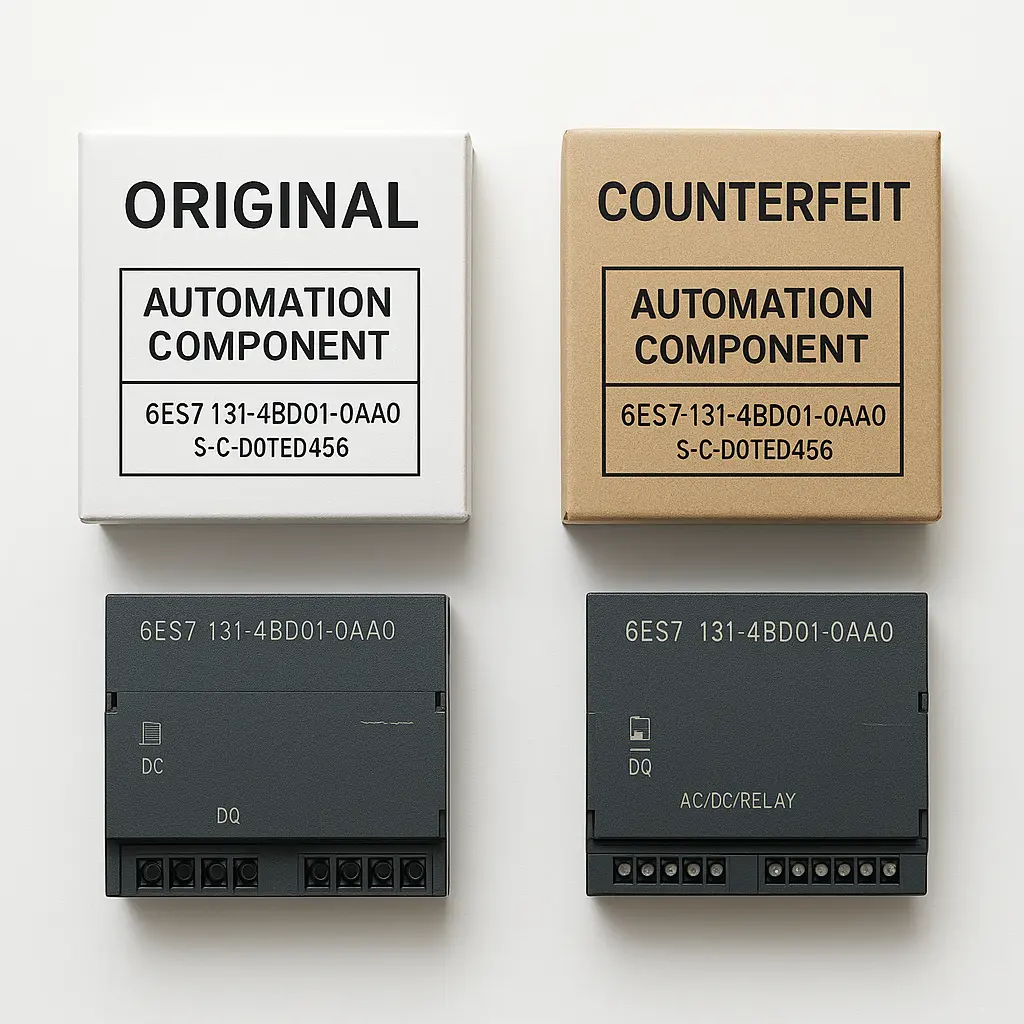
Authentic Allen-Bradley packaging follows strict specifications that counterfeiters struggle to replicate perfectly. Start by examining the box itself for color consistency. Rockwell Automation uses specific Pantone colors for its branding, and even slight variations in the blue tones or logo sharpness indicate potential issues.
Check security seals and tamper-evident tape carefully. Genuine packaging includes holographic security features that shift appearance under different lighting angles. If the seal looks like standard clear tape or the holographic effect appears printed rather than embedded, you’re likely dealing with repackaged or counterfeit goods.
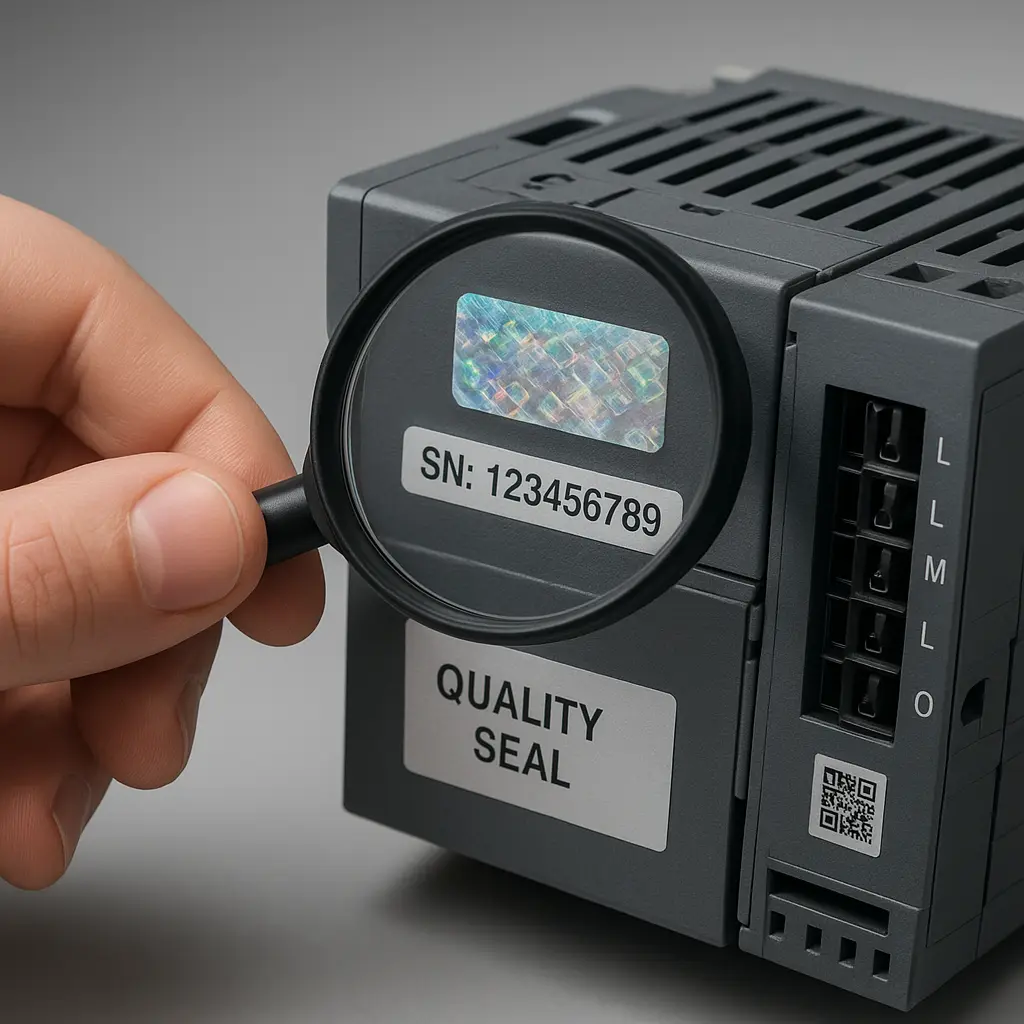
The printing quality on authentic boxes shows crisp text with no pixelation when examined closely. Counterfeit packaging often reveals fuzzy edges on small text or blurred barcodes when inspected under magnification. Pay particular attention to the font consistency, as counterfeiters frequently substitute similar but incorrect typefaces.
Box Material and Construction Quality
Rockwell Automation uses specific cardboard grades and construction methods. Authentic boxes have consistent corrugation depth and material thickness. The box corners should be precisely formed with clean glue lines, not excess adhesive or sloppy folds that suggest low-quality manufacturing processes.
A common mistake is accepting damaged packaging as normal wear and tear. While shipping damage occurs, multiple dents, retaping, or boxes that appear to have been opened and resealed warrant immediate scrutiny and detailed internal inspection before acceptance.
Step 2: Examine Labels and Serial Numbers
Label inspection requires understanding what authentic Allen-Bradley labels look like across different product lines and manufacturing periods. The label material itself provides the first clue. Genuine labels use durable materials with specific textures and adhesive properties that resist environmental degradation.
Serial number formatting follows strict patterns. Each Allen-Bradley product family uses consistent serial number structures with specific prefix codes, length requirements, and check digits. Document your facility’s common components and create reference guides showing proper serial number formats for quick verification.
Cross-reference every serial number with Rockwell Automation’s verification database before installation. This step catches cloned serial numbers where counterfeiters photograph legitimate labels and reproduce them on fraudulent components. The database will flag serial numbers that appear on multiple units or that don’t match the claimed manufacturing date.
Pro tip: Photograph labels during receiving inspection and maintain a digital archive. This documentation proves invaluable when warranty claims arise or when tracking component genealogy during failure investigations.
Barcode and QR Code Verification
Scan all barcodes and QR codes using proper industrial scanners, not just smartphone apps. Authentic codes should scan cleanly on the first attempt with correct formatting. Counterfeit labels often have slightly misaligned barcode bars or QR code positioning errors that cause scan failures or require multiple attempts.
The encoded information should match all visible label data exactly. Discrepancies between scanned catalog numbers and printed catalog numbers represent red flags that require immediate supplier contact and component rejection.
Step 3: Inspect Physical Build Quality
Open the component housing to examine internal construction. Authentic Allen-Bradley products show consistent manufacturing quality with precise component placement, uniform solder joints, and specific PCB colors that vary by product line but remain consistent within each family.
The plastics used in genuine components have specific textures, colors, and molding quality. Counterfeit housings often use cheaper plastic that feels different to the touch, shows visible mold lines, or has inconsistent wall thickness. Check screw bosses and mounting points for precision. Poorly formed threads or misaligned mounting holes indicate substandard manufacturing.

Examine solder joints under magnification. Authentic boards show consistent solder bead sizes, smooth finishes, and proper wetting to component leads. Cold solder joints, excessive flux residue, or hand-soldering irregularities suggest assembly outside Rockwell’s manufacturing facilities.
Component Quality and Sourcing
Check the integrated circuits and passive components for authentic manufacturer markings. Counterfeit assemblies often use remarked chips, out-of-specification capacitors, or lower-grade components substituted for the specified parts. Compare IC date codes with the assembly date on the label. Significant discrepancies suggest component recycling or fraudulent assembly.
Look for evidence of rework, such as lifted PCB traces, replaced components, or areas where solder has been disturbed and reapplied. Authentic factory assemblies don’t show rework unless the unit went through official Rockwell refurbishment programs, which should be clearly documented.
Step 4: Check Documentation and Certificates
Authentic Allen-Bradley components ship with specific documentation packages that vary by product category but always include certain standard elements. Request and verify compliance certificates, test reports, and traceability documents from your supplier before accepting shipments.
Certificates of Conformity should reference specific standards and include verifiable test data. Generic certificates that lack test equipment identification, calibration dates, or specific measurement results are typically fraudulent. Cross-reference certificate serial numbers with the issuing body when dealing with safety-critical components.
Material certifications for components containing restricted substances must comply with current RoHS and REACH regulations. Authentic documentation includes detailed material composition analysis and third-party laboratory verification. Certificates that appear photocopied multiple times or show inconsistent formatting raise immediate concerns.
Warranty and Support Documentation
Verify warranty activation procedures match Rockwell Automation’s current policies. Counterfeit suppliers sometimes provide fraudulent warranty cards or claim registration processes that don’t align with official channels. Test the warranty by attempting registration through Rockwell’s official website before installation.
Installation manuals should match the current revision for the component’s firmware version. Outdated documentation paired with supposedly new components indicates old stock, refurbished units being sold as new, or counterfeit products assembled using stolen documentation from years past.
Step 5: Verify Firmware and Software Signatures
Connect programmable components to Rockwell Automation software tools to verify firmware signatures and version integrity. Authentic Allen-Bradley PLCs, drives, and intelligent devices contain digitally signed firmware that the configuration software automatically validates during connection.
Use RSLogix, Studio 5000, or Connected Components Workbench to establish communication and read the firmware version. Compare the reported version against Rockwell’s published release notes for that product and manufacturing date. Mismatches indicate modified firmware or counterfeit components running unauthorized code.
Check for firmware modification evidence by examining the device’s flash memory structure when possible. Counterfeit components sometimes contain altered firmware that disables safety features, removes license restrictions, or introduces backdoors that create cybersecurity vulnerabilities in your automation network.
Pro tip: Maintain an air-gapped test environment for initial firmware verification before connecting any new component to production networks, especially when sourcing from unfamiliar suppliers.
Communication Protocol Validation
Test network communication behavior against specifications. Authentic components respond to diagnostic commands with specific timing and data structures. Counterfeit devices often exhibit protocol deviations, unusual latencies, or incomplete command implementations that become apparent during thorough communication testing.
Monitor startup sequences and self-diagnostic routines. Genuine Allen-Bradley devices follow predictable boot sequences with specific LED patterns and timing. Variations in these sequences, especially inconsistent behavior across supposedly identical units, indicate counterfeit hardware or unauthorized modifications.
Step 6: Test Electrical Characteristics
Perform electrical testing using calibrated equipment to verify components meet published specifications. Input/output modules should demonstrate voltage tolerances, current handling capabilities, and response times that match datasheet values within acceptable ranges.
Measure power supply characteristics carefully. Authentic Allen-Bradley power supplies maintain tight voltage regulation under varying load conditions with specific ripple characteristics. Counterfeit units often show excessive ripple, poor load regulation, or efficiency ratings that fall short of specifications by 10% or more.
Test switching speeds and signal integrity for digital I/O points. Counterfeit modules frequently use lower-grade optocouplers or output transistors that introduce additional propagation delays or reduced noise immunity compared to genuine components. These differences might not prevent basic operation but create reliability issues under electrical noise or high-speed operation.
Thermal Performance Testing
Monitor component temperatures under rated load conditions using thermal imaging. Authentic components show predictable thermal profiles with heat concentrating in expected areas. Counterfeit units often run hotter due to inferior thermal design, inadequate heat sinking, or out-of-specification components that dissipate excess power.
The data consistently shows that counterfeit power supplies and motor drives operate 15-25°C hotter than genuine units under identical load conditions. This thermal stress accelerates component degradation and creates premature failures that genuine parts wouldn’t experience under the same operating conditions.
Step 7: Validate Supplier Credentials
Investigate your supplier’s authorization status and distribution channel legitimacy before placing orders. Rockwell Automation maintains a network of authorized distributors who receive components directly from the manufacturer with full traceability and quality assurance.
Request proof of authorized distribution agreements and verify them independently through Rockwell Automation’s partner locator tools. Many counterfeit operations claim authorized status but cannot provide verifiable documentation. Contact Rockwell directly to confirm a supplier’s authorization status when dealing with unfamiliar sources.
Examine the supplier’s business practices and operational transparency. Legitimate distributors like Enicstra provide detailed component traceability, clear return policies, and responsive technical support. They willingly share procurement documentation and can articulate their quality verification processes in specific terms rather than vague assurances.
Red Flags in Supplier Behavior
Be suspicious of pricing that falls significantly below market rates without clear explanation. While legitimate distributors might offer competitive pricing through volume purchasing or efficient operations, prices 30-50% below market almost always indicate counterfeit goods, stolen components, or fraudulent operations.
Watch for suppliers who resist providing complete documentation, rush delivery without proper verification, or cannot articulate their supply chain sources. A common mistake is accepting vague claims about “exclusive supplier relationships” or “special procurement channels” without demanding concrete proof of authorized distribution status.
Step 8: Use Rockwell Automation Verification Tools
Rockwell Automation provides official verification resources specifically designed to help customers authenticate Allen-Bradley components. The Product Verification Service allows you to submit component information and receive confirmation of authenticity directly from the manufacturer.
Access the verification portal through Rockwell’s official website and follow the guided submission process. You’ll need clear photographs of labels, serial numbers, and packaging along with purchase documentation. Rockwell’s authentication team typically responds within 48 hours with definitive verification results.
Use the mobile authentication app for field verification when available. This tool uses image recognition and database cross-referencing to provide immediate feedback on component authenticity. While not foolproof, it catches obvious counterfeits and flags suspicious components for deeper inspection.
Contact Rockwell’s counterfeit reporting hotline when you identify fraudulent components. Reporting helps the manufacturer track counterfeit operations, warn other customers, and pursue legal action against counterfeiters. Your report contributes to industry-wide authentication improvement and protects other facilities from the same fraudulent suppliers.
Authentication Methods Comparison
| Authentication Method | Detection Rate | Implementation Complexity |
|---|---|---|
| Visual Packaging Inspection | Catches 45-60% of counterfeits through label inconsistencies, color variations, and packaging quality issues | Low complexity, requires trained receiving staff and reference materials for comparison |
| Serial Number Database Verification | Identifies 70-85% of counterfeits through cloned numbers, invalid formats, and manufacturing date mismatches | Medium complexity, needs internet access and integration with Rockwell verification systems |
| Physical and Electrical Testing | Detects 85-95% of counterfeits through build quality, component analysis, and performance deviations | High complexity, requires calibrated test equipment, technical expertise, and dedicated testing time |
Frequently Asked Questions
What percentage of Allen-Bradley components in the market are counterfeit?
Industry estimates suggest 8-12% of Allen-Bradley components purchased through unauthorized channels are counterfeit or remarked. This rate drops below 1% when sourcing exclusively through Rockwell Automation’s authorized distributor network. The counterfeit rate varies significantly by component type, with popular PLC models and I/O modules experiencing higher counterfeit attempts than specialized or newer products.
Can counterfeit Allen-Bradley components damage other system components?
Yes, counterfeit components frequently cause collateral damage to connected equipment. Counterfeit power supplies with poor voltage regulation can destroy downstream modules. Fraudulent I/O cards with inadequate isolation damage field devices through voltage spikes. In documented cases, counterfeit motor drives have caused catastrophic failures in motors worth tens of thousands of dollars due to improper control algorithms and inadequate protection features.
How long does a complete authentication inspection take for a single component?
A thorough eight-step authentication process requires 45-90 minutes per component depending on complexity. Basic visual and label verification takes 10-15 minutes. Serial number database checks add another 5-10 minutes. Physical inspection and electrical testing consume the majority of time at 30-60 minutes for programmable components. Most facilities implement tiered inspection where critical components receive full verification while commodity items undergo abbreviated checks.
What should I do if I discover counterfeit components already installed in production equipment?
Immediately assess the safety implications and plan replacement during the next scheduled maintenance window. Document the counterfeit discovery thoroughly with photographs and preserve the fraudulent component as evidence. Report the incident to Rockwell Automation and your supplier. Review your procurement records to identify other potentially affected components from the same source. Consider engaging a qualified integrator to verify system integrity and identify any degraded performance or safety vulnerabilities introduced by the counterfeit parts.
Are refurbished Allen-Bradley parts considered authentic if properly disclosed?
Legitimate refurbished Allen-Bradley components that undergo authorized refurbishment programs are authentic and backed by Rockwell Automation. These components receive new labels clearly identifying refurbished status and come with appropriate warranty coverage. The issue arises with unauthorized refurbishment where components are repaired using non-OEM parts, inadequate testing, or fraudulent labeling that misrepresents them as new. Always verify refurbished components come through Rockwell’s official remanufacturing programs with proper certification.
How can I verify Allen-Bradley components when purchasing obsolete or discontinued parts?
Obsolete component verification requires extra diligence since counterfeiters specifically target discontinued products with limited availability. Work with distributors who specialize in obsolete industrial automation and maintain detailed procurement histories. Request component traceability documentation showing the original purchase date and storage conditions. Be especially cautious of “new old stock” claims for products discontinued more than five years ago. Perform complete physical and electrical testing since obsolete components cannot always be verified through current Rockwell databases. Consider authorized refurbished alternatives when authentication confidence is low.
Do authorized distributors ever unknowingly sell counterfeit components?
While rare, sophisticated counterfeit operations occasionally penetrate authorized distribution channels through supply chain compromises or fraudulent intermediaries. This occurs in less than 0.1% of transactions through established authorized distributors. Reputable distributors implement their own authentication protocols and maintain direct procurement relationships with Rockwell Automation. When counterfeits do slip through, authorized distributors accept full responsibility, provide immediate replacements, and work with Rockwell to investigate the breach. This accountability distinguishes authorized distributors from gray market suppliers who typically refuse returns or claim immunity from authentication issues.
According to supply chain security research, counterfeit industrial components create cascading risks beyond immediate functionality, introducing cybersecurity vulnerabilities, safety compliance violations, and liability exposure that can persist for years after installation.
What authentication challenges have you encountered when sourcing Allen-Bradley components, and which verification steps have proven most effective in your facility?
References
- National Institute of Standards and Technology guidance on supply chain security and counterfeit component detection
- Statista research on global counterfeit manufacturing component market impact
- Manufacturing USA resources on industrial automation quality standards
- U.S. Department of Commerce reports on counterfeit industrial goods
