
When a critical Allen-Bradley PLC module or discontinued automation part fails on your production line, every minute of downtime costs thousands of dollars. Plant managers face this nightmare regularly: production halts, maintenance teams scramble, and procurement departments discover that standard suppliers can’t help.
Sourcing discontinued automation parts in the USA requires a different approach than ordering current inventory, and knowing the right strategies separates facilities that resume operations in days from those stuck waiting weeks.
Table of Contents
- Quick Takeaways
- Why PLC Components Become Obsolete
- Identifying Exact Part Specifications
- Sourcing Strategies for Discontinued Parts
- Manufacturer-Specific Considerations
- Verification and Quality Control
- Pricing and Lead Time Expectations
- Frequently Asked Questions
- References
Quick Takeaways
| Key Insight | Explanation |
|---|---|
| Documentation prevents sourcing failures | Complete part numbers including revision codes reduce error rates by 85% when sourcing obsolete components |
| Multiple sourcing channels required | Specialized distributors maintain inventory manufacturers discontinued 10+ years ago, while OEM channels typically support only 5-7 years post-discontinuation |
| Authentication is non-negotiable | Counterfeit automation parts cause 23% of unexpected system failures in facilities using unverified suppliers |
| Manufacturer ecosystems differ significantly | Allen-Bradley parts remain available longer through third-party channels than Siemens components due to market saturation differences |
| Price volatility increases with age | Parts discontinued 5+ years ago experience 200-400% price premiums compared to original list prices |
| Lead times vary by sourcing method | Established surplus distributors ship within 24-48 hours, while broker networks may require 2-6 weeks for rare components |
| Preventive purchasing reduces risk | Facilities that stock critical spares before discontinuation announcements avoid 90% of emergency sourcing situations |
Why PLC Components Become Obsolete
Manufacturers discontinue automation components for specific business and technical reasons that directly impact your sourcing strategy. Understanding these patterns helps predict which parts face imminent obsolescence and when to secure inventory.
Technology refresh cycles drive most discontinuations. Allen-Bradley typically maintains product lines for 10-15 years before introducing replacements with enhanced capabilities. Siemens follows similar timelines but often provides migration paths to newer platforms. The issue emerges when your installed base uses older architecture that newer modules can’t directly replace without system-wide upgrades costing six or seven figures.
Component supplier changes force discontinuations independent of market demand. When semiconductor manufacturers stop producing specific chips or circuit boards, PLC manufacturers lose the ability to build modules even if customer demand remains strong. In practice, this creates sudden obsolescence announcements with minimal lead time for final purchases.
Pro tip: Subscribe to manufacturer obsolescence notification services for every brand in your facility. Allen-Bradley, Siemens, and Mitsubishi publish end-of-life announcements 6-12 months before final order dates, giving you a critical window to stock spares.
Identifying Exact Part Specifications
Sourcing failures typically start with incomplete or incorrect part identification. A single character difference in a catalog number can mean incompatible firmware, different I/O configurations, or voltage specifications that damage connected equipment.
The complete part number includes manufacturer prefix, series designation, model number, and often a revision or firmware code. For Allen-Bradley components, catalog numbers like 1756-L63 look complete but miss the critical suffix indicating firmware version compatibility. The full specification might be 1756-L63/B LOGIX5563 with specific firmware requirements that determine compatibility with your existing chassis and network modules.
Physical Inspection Methods
Start by photographing the actual module label, which contains more information than bills of material typically capture. Most PLC components include multiple identifiers: the catalog/part number, serial number, manufacturing date code, and country of origin. Date codes help verify authenticity and indicate which production batch your module came from, relevant when manufacturers made running changes without updating catalog numbers.
Check internal circuit boards if external labels are damaged or unclear. Removing the module cover reveals additional markings that specialized distributors use to identify exact specifications. This becomes essential for obsolete automation parts where documentation no longer exists in manufacturer databases.
Pro tip: Create a digital inventory database with high-resolution photos of every critical PLC component in your facility before failures occur. This documentation proves invaluable when sourcing replacements under pressure.

Sourcing Strategies for Discontinued Parts
Multiple procurement channels exist for discontinued components, each with distinct advantages and limitations. Successful maintenance teams use parallel sourcing approaches rather than relying on a single method.
Specialized Industrial Surplus Distributors
Companies that focus exclusively on discontinued automation components maintain warehouses of parts manufacturers stopped producing years or decades ago. These distributors purchase surplus inventory from OEMs during product transitions, acquire parts from facility decommissions, and build networks of international suppliers.
The advantage here is inventory depth and authentication processes. Established distributors implement quality verification that screens out counterfeit components, provide warranty coverage, and maintain stock ready for immediate shipment. For facilities needing Allen-Bradley discontinued modules or Siemens obsolete components, specialized distributors often represent the fastest path to authentic parts.
Enicstra exemplifies this model by combining global sourcing networks with authentication protocols and expedited delivery. Rather than waiting weeks for broker networks to locate parts, specialized distributors stock high-turnover obsolete components and can source rare items through established supplier relationships.
Manufacturer Last-Time-Buy Programs
OEMs typically offer final purchase opportunities when announcing discontinuations. These last-time-buy windows range from 3-12 months depending on the manufacturer and component complexity. The challenge is recognizing these opportunities before windows close and accurately forecasting long-term spare parts needs.
Allen-Bradley and Siemens both publish product change notifications through their distributor networks. Facilities with proactive maintenance programs monitor these announcements and place strategic orders for critical spares. The data consistently shows that parts purchased during last-time-buy programs cost 60-70% less than sourcing the same components three years later through secondary markets.
Repair and Refurbishment Services
When sourcing replacement units becomes impractical due to cost or availability, professional repair services extend the life of failed components. Specialized repair houses maintain component-level expertise for specific PLC families and stock common failure parts like capacitors, relays, and connectors.
Repair makes economic sense for expensive processor modules and specialized I/O cards where replacement costs exceed several thousand dollars. Turnaround times typically range from 5-10 business days, longer than stocking spares but faster than waiting for rare components to surface through broker networks.
Manufacturer-Specific Considerations
Each major PLC manufacturer has distinct product lifecycles, support policies, and secondary market availability that impact sourcing strategies. Treating all discontinued parts identically leads to suboptimal results.
Allen-Bradley Discontinuation Patterns
Rockwell Automation maintains longer support cycles than competitors, with many product lines receiving support 15-20 years after introduction. The PLC-5 family, discontinued in the early 2000s, remains relatively easy to source through specialized distributors because of the massive installed base and surplus inventory available.
ControlLogix and CompactLogix platforms have better long-term availability prospects. These systems use modular architectures where individual I/O modules become obsolete but chassis and processors receive extended support. When sourcing Allen-Bradley discontinued components, focus on identifying compatible alternatives within the same product family before resorting to exact-match sourcing.
Siemens Component Availability
Siemens follows more aggressive product transition cycles, particularly in the S7 family. The S7-300 series, while still widely installed globally, faces increasing component scarcity as Siemens pushes migration to S7-1500 platforms. Siemens obsolete components typically command higher premiums in secondary markets because the company maintains tighter control over surplus inventory channels.
The SIMATIC product line creates additional complexity with regional variations. Components specified for European installations may have different certifications or electrical specifications than North American versions. When sourcing discontinued Siemens parts, verify regional compatibility beyond catalog number matching.
Mitsubishi Sourcing Challenges
Mitsubishi Electric automation components present unique sourcing difficulties in Western markets due to distribution network differences. The MELSEC platform dominates Asian manufacturing facilities but has smaller installed base in North America and Europe, reducing secondary market inventory.
Parts availability through Japanese surplus markets often exceeds what North American distributors can provide. For facilities with critical Mitsubishi dependencies, establishing relationships with distributors who maintain Asian sourcing networks provides access to inventory unavailable through domestic channels.
| Sourcing Method | Typical Lead Time | Best Use Case |
|---|---|---|
| Specialized Surplus Distributors | 24-48 hours for stocked items, 1-2 weeks for sourced parts | Emergency replacements requiring authenticated components with warranty coverage |
| Broker Networks | 2-6 weeks depending on part rarity | Extremely rare components where price is secondary to availability |
| Component Repair Services | 5-10 business days | Expensive modules where replacement costs exceed $3,000-5,000 |
| International Surplus Markets | 3-4 weeks including customs | Asian-market components (Mitsubishi, Omron) with limited domestic availability |
Verification and Quality Control
Counterfeit and substandard automation components represent serious operational risks. Unlike consumer electronics where counterfeits cause inconvenience, fake PLC modules create safety hazards, production losses, and potential equipment damage.
A common mistake is assuming all authorized distributors automatically authenticate inventory. In practice, authentication requires specific processes: visual inspection by trained technicians, electrical testing to verify performance specifications, and documentation verification including serial number validation against manufacturer databases when available.
Authentication Indicators
Legitimate obsolete components show consistent aging patterns. Labels fade uniformly, circuit boards develop characteristic patina, and date codes align with serial number sequences. Counterfeiters often use remarked components, taking working modules from cheaper product lines and relabeling them as expensive discontinued parts.
Physical inspection reveals remarking through inconsistent label printing, misaligned text, or adhesive residue from removed labels. More sophisticated counterfeits require opening modules to inspect circuit boards for signs of component replacement or sanding that indicates remarked chips.
Reputable distributors provide test reports documenting functional verification. For critical applications, request that suppliers power up and test modules before shipment rather than accepting untested surplus inventory. This additional step identifies dead-on-arrival components before they create production emergencies.
According to industry estimates, counterfeit electronic components account for 10-15% of the global electronics supply chain, with industrial automation parts representing high-value targets for counterfeiters due to premium pricing and limited supply.
Pricing and Lead Time Expectations
Discontinued component pricing follows supply and demand economics with extreme volatility. Parts that sold for $500 when current may cost $2,000-3,000 five years after discontinuation if demand remains strong and supply diminishes.
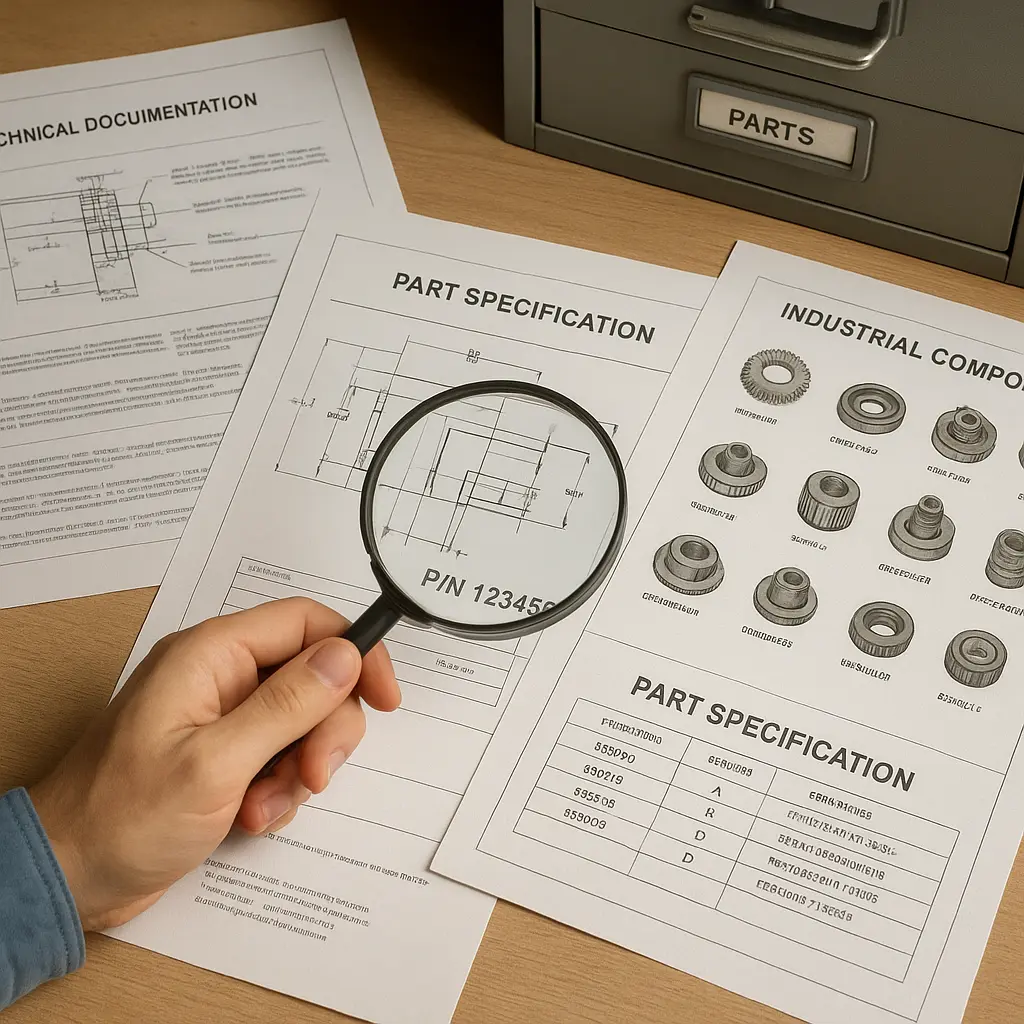
Set realistic budget expectations by understanding that obsolete parts cost multiples of original pricing. The premium pays for supplier acquisition costs, inventory carrying costs, authentication processes, and scarcity value. Facilities that resist these market realities often make poor decisions like purchasing unverified components from questionable sources or delaying replacements until failures occur.
Lead Time Variables
Stocked items from established distributors ship within 24-48 hours globally. Enicstra and similar specialized distributors maintain inventory of high-turnover discontinued PLC parts, enabling emergency shipments that arrive before components sourced through broker networks even get located.
Non-stocked items require sourcing time. Distributors with strong supplier networks typically locate and deliver parts within 1-2 weeks. Extremely rare components may take 4-6 weeks as suppliers check international markets and competing distributors for available inventory.
The difference between expedited and standard sourcing often comes down to supplier relationships. Distributors who regularly purchase surplus inventory from decommissioned facilities and maintain active buying programs can access inventory that occasional buyers never discover.
Cost Control Strategies
Strategic purchasing reduces long-term costs dramatically. When manufacturers announce discontinuations, calculate realistic spare parts needs for your expected equipment lifespan and purchase during the last-time-buy window. This upfront investment costs 60-70% less than purchasing the same components years later through secondary markets.
Consider purchasing multiple units when sourcing rare components. The incremental cost of buying three modules instead of one is minimal compared to repeating the entire sourcing process if another failure occurs six months later. Excess inventory purchased strategically has resale value to other facilities facing the same obsolescence challenges.
Pro tip: For components with replacement costs exceeding $5,000, get quotes from multiple specialized distributors simultaneously. Pricing varies significantly based on each supplier’s acquisition cost and inventory age, potentially saving thousands on individual purchases.
Frequently Asked Questions
How long after discontinuation can I typically find PLC components?
Common components from major manufacturers like Allen-Bradley remain available through specialized distributors for 10-15 years after discontinuation due to large installed bases and surplus inventory. Less common components, particularly from smaller manufacturers or specialized application modules, become difficult to source within 3-5 years. The availability window depends more on original production volumes and installed base size than time since discontinuation.
What documentation should I request when purchasing obsolete automation parts?
Request certificate of authenticity, test reports documenting functional verification, serial number traceability, and warranty terms. Legitimate suppliers provide this documentation routinely. Also ask for clear photos of the actual component including label and housing condition before shipment. Suppliers who refuse documentation requests or claim items are too old for testing should be avoided regardless of price advantages.
Are refurbished components as reliable as new old stock?
Professionally refurbished components from reputable repair houses often match or exceed reliability of aged new old stock because the refurbishment process replaces wear items like electrolytic capacitors that degrade over time regardless of use. New old stock sitting in warehouses for 10+ years experiences component aging that refurbishment addresses. The key distinction is refurbishment quality, which varies significantly between professional repair houses and basic resellers who clean components without electrical restoration.
Can I substitute newer PLC modules for discontinued components?
Substitution feasibility depends on system architecture and the specific component. Some manufacturers design backward compatibility into newer product lines, allowing direct replacement with configuration changes. Other systems require matched components across the entire installation. Allen-Bradley ControlLogix offers better substitution options within the platform than older PLC-5 systems. Always verify compatibility with manufacturers or experienced system integrators before attempting substitutions, as incompatible replacements can damage existing equipment or create dangerous operating conditions.
What are the risks of purchasing from unverified international suppliers?
Unverified suppliers present multiple risks beyond counterfeits, including receiving incorrect components despite matching catalog numbers, modules from incompatible regional specifications, damaged goods without recourse, and payment fraud where suppliers disappear after receiving funds. International transactions also involve customs delays, import duties, and complex return logistics if components fail. These risks multiply when dealing with high-value automation components. Established distributors with physical locations, published contact information, and verifiable business history cost more but eliminate fraud risks that can exceed price savings.
Should I repair failed components or purchase replacements?
Repair makes economic sense when replacement costs exceed $3,000-5,000 and reputable repair services exist for your specific component. High-value processor modules, specialized communication cards, and large I/O assemblies typically justify repair costs of $500-1,500 versus replacement costs of $5,000-10,000. Repair becomes less attractive for commodity I/O modules under $2,000 where repair costs approach 50-70% of replacement costs. Factor in the 5-10 day repair turnaround versus 24-48 hour availability of stocked replacement parts when downtime costs are significant.
How can I prevent future obsolescence problems?
Implement a three-part strategy: monitor manufacturer product change notifications religiously and purchase spares during last-time-buy windows, maintain relationships with multiple specialized distributors who stock components for your installed equipment, and budget for technology upgrades before components become unsourceable. Facilities that treat obsolescence as a predictable lifecycle event rather than an emergency manage transitions at 30-40% of the cost facilities face when forced into reactive responses. Document every critical component in your installation with complete part numbers and maintain this inventory in searchable databases accessible to maintenance and procurement teams.
What strategies have worked best for your facility when sourcing discontinued automation components, and what suppliers have proven most reliable for hard-to-find parts?
References
- Statista industrial automation market statistics and manufacturing sector data
- National Institute of Standards and Technology manufacturing and quality standards
- McKinsey insights on supply chain management and industrial operations
- International Society for Pharmaceutical Engineering automation and validation resources
